
Loading...
Serving Albany, OR and surrounding areas. (458) 233-8172
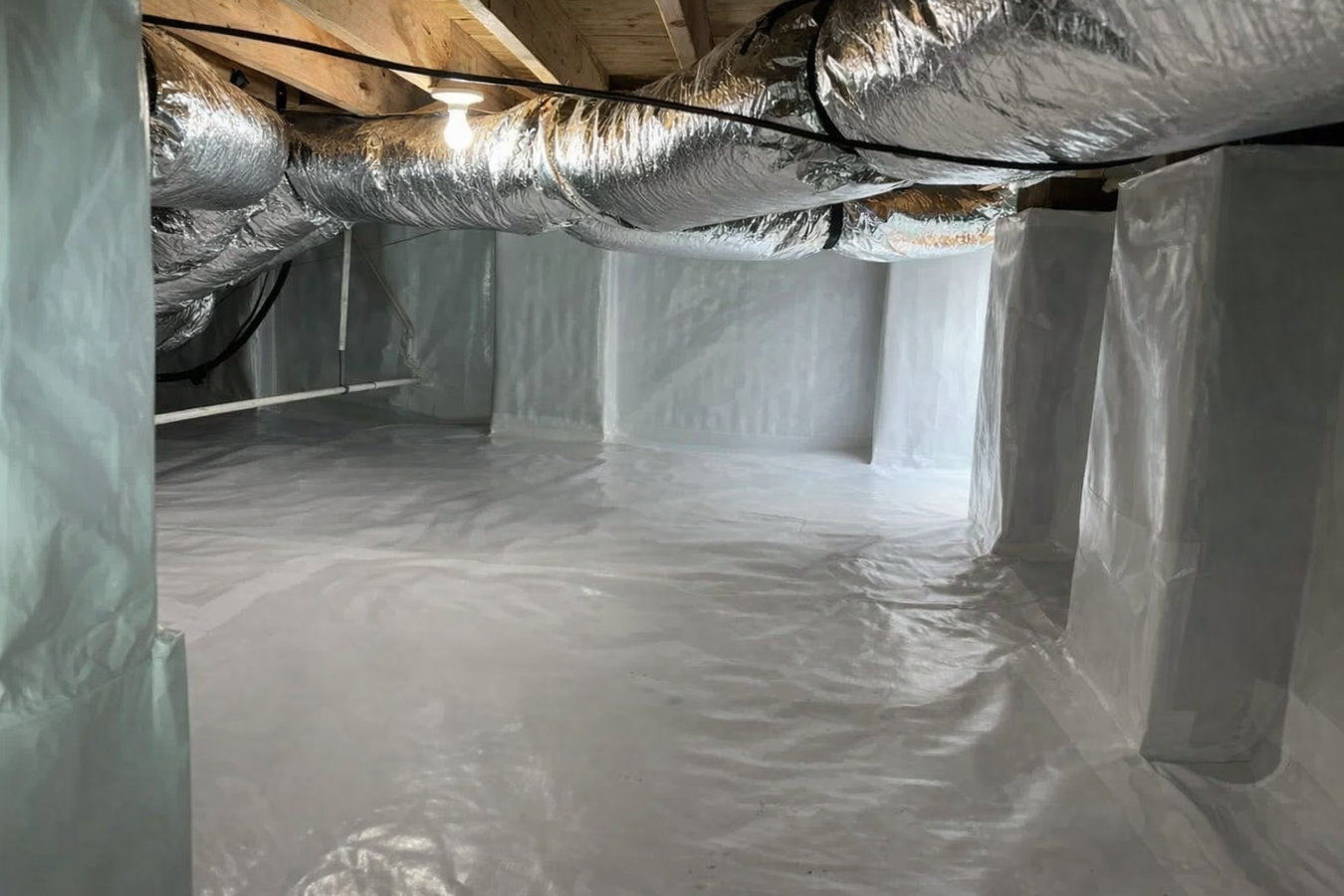
Albany winters keep the ground under your home saturated for months. A properly installed vapor barrier blocks that moisture before it reaches your floor joists, insulation, and living space.
A crawl space vapor barrier in Albany, OR is thick plastic sheeting laid across the dirt floor of your crawl space to block ground moisture from rising into your home's structure, and most single-family installations are completed in one to two days.
Albany sits in the Willamette Valley, where average annual rainfall is around 44 inches and the rainy season runs from October through April. During those months, the clay soil under your home stays saturated for weeks at a time. Without a barrier, that moisture travels upward into your floor joists, subfloor, and insulation - quietly weakening the structure and affecting your indoor air quality. Many Albany homes built before 1980 were constructed when moisture protection standards were minimal or nonexistent, so a proper vapor barrier may never have been installed in the first place. If your home also needs insulation work in the crawl space, crawl space insulation pairs well with vapor barrier installation to address both moisture and heat loss at once.
The good news is that once a barrier is installed correctly - with overlapping seams taped, edges run up the foundation walls, and no bare dirt exposed - it works continuously with no ongoing maintenance. You simply stop the moisture problem at the source rather than dealing with its effects year after year.
If your home develops a damp, earthy odor between November and March - especially in rooms closest to the floor - that smell is almost always coming up from the crawl space. Albany's rainy season keeps the soil under your home wet for months, and without a barrier, moisture and mold move right into your living space. The smell often fades in summer, which can make homeowners think the problem resolved itself - but the damage continues underground.
When moisture from the crawl space soaks into your floor joists and subfloor over time, the wood begins to weaken. You might notice a slight bounce or give when you walk across certain areas, or a floor that used to feel solid now feels a little spongy underfoot. This is a sign that moisture has been working on the structure for a while - a vapor barrier is one of the first steps to stopping further damage.
If you peek into your crawl space and see water droplets on pipes, metal ducts, or the underside of the floor, that condensation is a clear sign of excess moisture. In Albany's climate, this is especially common in late fall when the ground is still warm but the air turns cold - a combination that causes moisture to collect on any cool surface. A vapor barrier significantly reduces the source of that condensation.
Many Albany homes built before 1980 have crawl spaces with little or no moisture protection, and damp insulation loses much of its ability to keep heat in. If your heating bills seem high relative to what you expected when you moved in, a compromised crawl space could be part of the reason. A vapor barrier helps your existing insulation do its job properly, which often shows up as real savings on your energy bill within the first winter.
We install crawl space vapor barriers for single-family homes throughout Albany and the surrounding mid-valley. Every installation starts with a full assessment of your crawl space: we check for standing water, measure the space, look at any existing barrier, and inspect the condition of your floor joists and insulation before recommending anything. Material thickness matters - most quality installations use sheeting rated at 10 mils or heavier, which holds up against foot traffic from future plumbing or electrical work. We cover the entire ground surface with no gaps, overlap all seams by at least 12 inches, tape them securely, and run the edges several inches up the foundation walls. If your crawl space also needs insulation work, we can pair a vapor barrier installation with crawl space insulation so both are addressed in the same visit.
For homes with significant moisture history or near Albany's river floodplain, we also discuss whether a standard vapor barrier is sufficient or whether a more comprehensive approach - including drainage improvements or a dehumidifier - makes sense for your specific situation. Full crawl space encapsulation is one step beyond a standard barrier, sealing the walls as well as the floor for a higher level of moisture control. A complete vapor barrier installation that covers walls and includes seam sealing and perimeter fastening is available for homeowners who want the most thorough protection possible.
Suits most Albany homes - thick sheeting covering the full crawl space floor with taped seams and perimeter wall coverage to block ground moisture at the source.
Best for homes near Albany's Calapooia or Willamette River where flood risk is higher - thicker material and enhanced perimeter sealing for more demanding conditions.
Combines vapor barrier installation with crawl space insulation in a single visit - addresses both moisture and heat loss for older Albany homes in one project.
Albany's position on the flat floor of the Willamette Valley creates conditions that are hard on crawl spaces. The heavy clay soil in this area holds moisture long after a storm ends - unlike sandy soils that drain quickly, clay keeps the ground under your home saturated for weeks. Combined with roughly 44 inches of annual rainfall and a wet season that runs nearly half the year, Albany homes face sustained ground moisture pressure that simply does not exist in drier parts of Oregon. The historic neighborhoods around Hackleman and Monteith are full of homes built in the mid-20th century, many of which went up before crawl space moisture protection was standard practice. If your home is in one of these neighborhoods, a proper vapor barrier may never have been part of the original construction. We work throughout the Albany area, including Millersburg and Corvallis, where the same Willamette Valley clay soil conditions apply.
Albany also has a spring flooding risk in low-lying neighborhoods near the Calapooia and Willamette Rivers. During late winter, when snowmelt combines with heavy rain, water tables rise quickly and homes in or near the floodplain can see moisture intrusion that a standard barrier needs to be designed for. Knowing your property's flood zone status before a vapor barrier project starts is something we always check - it shapes what material thickness and drainage approach we recommend. The FEMA Flood Map Service Center can confirm whether your property falls in a mapped flood zone, and the Oregon Building Codes Division outlines when permits are required for crawl space work.
We ask a few basic questions about your home - size, whether you have noticed moisture signs, and when anyone last accessed the crawl space. Most Albany homeowners hear back within one business day to schedule a free on-site estimate.
We access your crawl space through the hatch or exterior vent opening and check for standing water, mold, existing barrier condition, and floor joist health. The visit typically takes 20 to 45 minutes, and we walk you through exactly what we found before leaving.
You receive a written quote within a day or two that breaks down material cost, labor, the thickness of sheeting being used, and whether any prep work - like debris removal - is included. Any additional work like insulation or drainage is listed separately so you can decide what to prioritize.
The crew clears any debris, rolls out and cuts the sheeting, overlaps and tapes all seams, then fastens the edges up the foundation walls. Most Albany homes are finished in a single day. Before leaving, we show you photos of the completed work and explain what to watch for going forward.
Free estimate, no obligation. We respond within one business day and work throughout Albany and the surrounding area.
(458) 233-8172We have been working in Albany-area crawl spaces long enough to know what the combination of clay soil, high rainfall, and older housing stock actually looks like on the ground. That local experience means we recognize problems that a contractor unfamiliar with mid-valley conditions might miss - and we know how to spec a barrier that holds up through Albany winters, not just on paper.
Our crews have years of hands-on experience with crawl spaces across the Willamette Valley. We give you a written scope before we start, coordinate any permits your project needs, and document the finished work with photos - so you know exactly what was done under your home.
A vapor barrier only works if it covers the entire crawl space floor with no gaps around piers, posts, or pipes. We install with overlapping seams taped by at least 12 inches and edges fastened securely to the foundation wall - not left loose on the dirt. We show you photos of the finished work before we leave so you can verify coverage yourself.
If your Albany home is near the Calapooia or Willamette River, we check flood zone status before recommending a solution. Homes in mapped flood zones may need heavier material or additional drainage work before a standard vapor barrier makes sense - we flag that upfront rather than discovering it after installation day.
Together these mean you are hiring a local contractor who knows Albany's specific conditions, stands behind the work, and gives you documentation you can keep on file for future inspections or resale.
Full vapor barrier installation covering walls as well as the crawl space floor, with sealed seams and perimeter fastening for comprehensive moisture control.
Learn MoreInsulation installed in the crawl space to reduce heat loss through the floor - pairs directly with a vapor barrier to address both moisture and energy efficiency.
Learn MoreAlbany's rainy season starts in October - call today or request a free estimate and get your crawl space protected before the wet weather arrives.